

In this episode…
…a conversation where we connect ways of access making in institutions, disability justice and grief.
Ableism teaches us to not have needs. This is why access making within (cultural) institutions is about navigating needs within a structure, designed not to budge and to always keep going. Institutions are not the end all, be all. When you start to take for granted the way the situation of gathering is set up, when you are not feeling any sort of constriction about how that’s happening, that’s when you are becoming complicit.
How does the ongoingness of access making in institutions, show up in the body? Why do institutions have to exist forever? Inspired by examples of Black trans femme activists organizing as a group, we walk through how new cultures of accessibility need to be developed in the framework of institutions in the Netherlands.
We’ll need to work with them. They have a lot power and are sometimes able to protect. Though we are not certain they are equipped to handle the realities of fragile bodies, bodies that are in pain, become ill and also die. We wonder out loud what we can do, and what ways there are to gather that value all life, as well as death care. Because the living conditions we are faced with, require of us to think and talk about these realities.
On 12 November 2026 this conversation will be launched as episode 3.
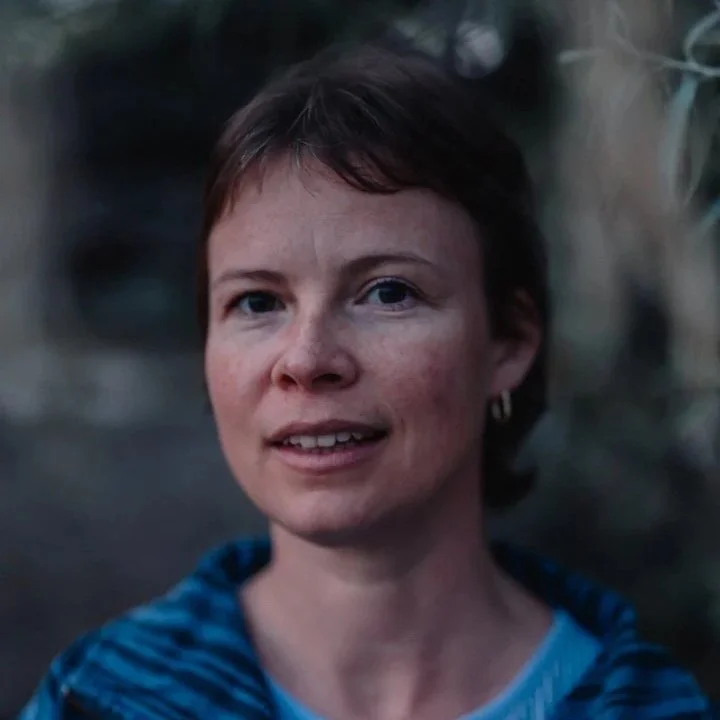
Staci Bu Shea
Based in Utrecht, the Netherlands, Staci has a multi-faceted artistic and cultural practice. Broadly, they convene with others over aesthetic, critical, and poetic practices of social reproduction and care work, as well as its manifestations in interpersonal relationships, daily life, community organizing, and institutional practice.
They recently authored Solution 305: Dying Livingly (Sternberg Press, 2025), a series of propositions and encounters in service to an aesthetic, critical, and poetic experience of living life led by death. As a careworker Staci supports people at times of transformation. They are a queer parent, avid walker, and qigong practitioner.
ID: A portrait of Staci, a white person with short brown hair and wearing a striped denim top, who looks into the camera mouth slightly open while speaking. Staci is outside at dusk. | Photo credit: Liza Wolters | 2026Building a powerful archive of embodied knowledge, one conversation at a time.