
In this episode…
…a conversation about what experiencing the pandemic is like for René.
In times where there are no clear rules of engagement, maneuvering a supermarket while social distancing is akin to dancing the tango with a total stranger. As it turns out; when clarity is of the utmost importance, politeness may no longer be an option.
On 22 October 2026 this conversation will be launched as episode 2.
transcription of this episode
Sandra: I can't see fuck-all right now, René.
Does it say hi?
René: Yes.
Sandra: Could you say something?
René: What do you want me to say?
Sandra: Who are you and, how old are you now?
René: I am René Nagtegaal and I am fifty years old.
Sandra: Very good — I can hear you clearly.
That was a nice little test.
Let me shut it off again.
[pause]
[resume recording]
Sandra: René, we're going to have a little chat about 'the other person'.
Who do you think of when you hear the word 'the other'?
René: Not myself — someone else, another person.
Sandra: And when you interact with other people, do you perceive them as different, or do you say, “No, we’re the same”?
René: Very different....
Sandra: And could you give an example of why that’s completely different?
René: An example. Like, a person or — more specifically?
Sandra: Well, or an example of an experience where you thought, “I just don’t get it” or “that’s weird.”
René: I generally find almost everyone to be strange - just because they’re different.
Sandra: And what’s different?
René: Yeah, a lot of the time I understand the words of course but often not the meaning.
Or someone says something where I understand the meaning, but what they actually meant turns out to be something else.
Sandra: Do you feel like people are intending something else than what they are actually saying?
René: Yes, very often.
Sandra: Do you find that confusing?
René: Yes, very confusing.
Sandra: Why is it confusing?
René: I’d be so happy if they just said what they meant.
Then I wouldn’t have to guess really, that’s often what I try to do.
Yes.
Sandra: And how does that make you feel when you have to guess like that?
René: Helpless.
Distraught, especially.
Dumb, often.
Sandra: And do you often have to guess?
René: All the time.
Though fortunately it happens less and less.
But still very often.
Sandra: And why has it been happening less and less?
René: Because I have practiced a lot.
For that, I had therapy, to work on it.
And I have gotten better at understanding my way of processing - still no clue about how other people process - but I recognize more things.
That, when someone says something, they might mean something else.
And that now I can often, within the context, somehow figure out what they mean.
Sandra: Do you feel that because of this, you yourself are seen as different too?
René: I’ve actually never really thought about that until I was diagnosed with Asperger’s.
Then I started thinking about it more.
And then I started suspecting that people regard me as being different.
But a lot of people did not know you experienced the world differently or got confused by some of the conversations.
Sandra: And what was that like?
That you really had to try your hardest, and that people didn’t understand that it takes a lot of effort.
Because for them, it’s completely normal.
René: Yeah. The beginning of your question has escaped me.
You mean, when I am communicating with others?
Sandra: Yes.
René: Yes, when communicating with others, I often feel that I have to try really hard.
To understand what someone really means.
And that’s often something completely different from what they say.
And since I take information as being quite literal.
Yeah, it might happen that my answer is very confusing for the other person.
That they think: Don't you get what I am saying?
Well, apparently not.
And if people don’t ask any follow-up questions, then I’m still searching for, well ...what are we even talking about right now?
Are we talking about the same thing or not?
Are we on the same page?
So yes, I feel like I have to put in a lot of effort.
Sandra: And have you, ever felt that people noticed this effort?
In work situations, for example?
René: Well, I wonder about that.
If I would mention it, how hard I had to work for it...
Then people did understand.
Or at least...
Yeah, how to describe it...
Maybe would have some empathy for the fact that I have to try so hard, but still don’t understand how that works.
Sandra: And sometimes it didn’t stick, which meant it didn’t go smoothly the next time either?
René: Yeah, I had to mention it over and over again.
Sandra: Looking back now, you’ve developed over the last couple of years and looked at ways to cope...
If you look back now at previous experiences, as a child at school for example... what that was like for you?
René: As a child... at school...
...it’s all a big blur...
...I had a hard time concentrating...
...was described as a daydreamer or easily distracted.
Often also because things, especially at primary school, you are learning, so there's a lot of repetition...
And then I'd be bored again.
Then I thought, yeah, hello, I already get that.
You know, you don’t have to keep repeating.
Later, of course, I realized it was repeated for other people, but I didn’t realize that at the time.
So I mainly found it boring and difficult to stay present - I'd rather just stare out the window.
Sandra: And did you have a lot of friends?
René: The concept of friendship remains complicated for me.
It makes more sense to me than I used to but I myself was not thinking about whether I really had any friends.
I wouldn’t be quick to consider someone a friend.
But I did get the impression that kids liked me and would want to play, at school or after school.
I did not consider nor understood why anyone would want to spend time with me, didn’t really get it.
Sandra: But did you meet people — for example, a class mate — and if someone initiates contact, you’ll go along with it, but if it didn’t happen, that was okay too.
René: Yeah, exactly. Especially that.
I was perfectly able to spend time by myself, to keep myself entertained.
Sandra: If we use the word 'other', any differences are emphasized.
So when people hear the word Asperger’s they pay attention to any differences.
Some folks make assumptions about people with Asperger’s. How they are not empathetic, or have no feelings.
What is your response to those prejudices?
René: I know I do have empathy.
That might not always be evident on the outside.
But I do have feelings for people.
I think that the closer someone is to me, the more I feel for them.
If someone is a stranger to me, or when I read the news, it does not affect me right away.
Unless it is really something that affects me, or a group of people whom I feel empathy for. Then yes.
Sandra: And would you say you managed to develop your ability for empathy?
René: Definitely.
And to come back to your question, what is my response when people say that folks with Asperger’s don’t have empathy, I always try to explain very clearly and very calmly that what they’re saying is incorrect.
And then I give an example, like the one I just mentioned.
Because I do want the truth, and that might be my truth, but I want people to know the truth.
And if people don’t do justice or have incorrect information, I want to provide accurate information.
Sandra: And you have taken action towards informing people about autism, right?
René: Yeah, definitely.
Before, I always thought, I don’t care what you think, or what you think about autism.
Of course I had an opinion about it, but I didn't communicate those thoughts openly.
Now, because I have a greater knowledge about autism myself and understand how it works, I can explain it better.
So I have made great strides in that area, I think.
Sandra: It might also be good to mention the importance a low-stimulus environment.
Now, there's more capacity for your emotions.
So, can you explain why it’s so important for your quality of life to live in a low-stimulus environment?...
René: Yes, if there are too many stimuli, then I experience sensory overload - which actually makes perfect sense.
Because of that, my brain hardly has any capacity to process information correctly - it requires all my attention to keep functioning.
So at that moment, there is nothing left to process emotions.
Or I’m actually feeling a lot, which means I can’t think straight.
Any physical overstimulation that I experience, has me feeling extremely uncomfortable.
I feel that very strongly in my body, so a lot of tension as the stress is building.
Imagine, the fewer stimuli there are, the more space I have to function properly and to communicate effectively as well.
Sandra: In this conversation we focus on differences, between your lived experience and those of 'the others'.
Do you understand, then, how people function with all of the stimuli we are exposed to in our society?
René: No, generally I do not.
But I also see other folks struggle a lot with sensory overload.
And that they often don’t even realize it themselves.
And then wonder why they are so tired or over-stimulated, or why it’s all so complicated.
Sandra: These are questions you asked yourself, or wondered about at one time; where does it actually come from?
René: Yes, absolutely. Very much so.
But it mostly came down to asking myself questions, because I didn’t have any answers.
I just really didn’t know.
I just thought it was all part of life.
That everyone else experienced the world as I did.
I had no idea that anyone else would be that different.
I thought it was normal - let me put it that way.
Sandra: Can you let others into your life?
René: In what sense do you mean that?
Sandra: Well, when you meet someone, do you have the capacity to embark on friendships?
René: Yeah, these days I do.
But I think it is still a hassle.
It may seem as if I have no trouble connecting with people.
But any interaction must be about something significant.
So there has to be a mutual area of interest, or the person themselves are interesting.
And they also have something to say that I would consider interesting, then an interaction can be running smoothly.
But if that’s not the case, then I find it very complicated...
...to keep a conversation going with someone.
And then to think: I would be willing to invest, even more time or energy into it.
Sandra: Do you weigh if you invest time and energy in people, on whether it is worth the tremendous effort?
So it’s not about getting to know someone, no, you actually have to instantly feel: this is meaningful!
René: Yes. There has to absolutely be an immediate click.
Otherwise, it doesn’t work for me.
Sandra: And what I’m really curious about is, what role does ‘the other’ have in your thoughts?
Are you worried about how people perceive you?
René: That’s a complicated question.
Well, the question isn’t that complicated, but...
I think I am not pre-occupied with how I come across.
Moreover, if it’s a spontaneous encounter, then I’m so present in the moment.
That I am who I am, and not preoccupied with what anyone thinks or their impression of me.
I usually don’t really notice that either.
Maybe that’s actually an advantage because it is one less thing to worry about.
But if I have an appointment, and I know I’m going somewhere and there’s an objective, then I’m really focused on it.
And especially because I don’t want the person to think:
"does that strange guy even understand what we’re talking about here?"
"With his weird comments or his questions like... what do you mean exactly?"
While someone else might be thinking yes, but that’s actually a very clear question, after all.
Then I find it very complicated, and then I’m really preoccupied with it.
Yeah, too much, I think — which is why I end up getting all worked up.
And the other person is even more likely to think: "What a weird joker."
Sandra: And you are using words like: 'strange guy' and 'weird joker', when describing what people may think of you.
Is that because people actually call you those names to your face - is that your experience?
René: Others do not really use those words no...
But it used to be, that folks were like: "don't know what he’s all about but he always makes me laugh."
While I did not intend to be funny.
And at some point, you realize that people find things funny that you say.
Even if I did not always intend to be funny.
So, then it kind of becomes a role.
I thought: "Apparently being funny is the point now."
So that’s why I often thought, yeah, they think I am funny and probably also a little weird.
Sandra: And did you comprehend why they thought it was funny?
René: Often not at all.
Because I’d just say something that popped into my mind, not meaning for it to be funny.
Or even thought it was funny myself.
Because for me it was normal.
So no, often I did not have a clue why other people thought something was funny.
Sandra: Would you say, that while interacting with people you were very different from when you were alone?
René: Yes, I always am.
Yeah when I interact with people I am very different from when I am by myself.
When I’m alone, especially in my own low-sensory place, I do feel pretty chill and comfortable.
I don’t get too stressed there.
Although, when it comes to interacting with others, I am always scanning:
"What is supposed to happen now?" and "what is the meaning of it?"
Often, there’s no meaning to these gatherings at all.
Except for 'getting cozy', spending time together, while 'enjoying each other's company'...
Now, 'getting cozy', that's really a concept that has me thinking:
"Okay, and what is the meaning of that?"
No clue, really.
And that is why it remains an enigma for me.
And especially back then, I used to revert back to my self-taught role.
Then I would joke around.
Then everyone laughs.
And I may feel a little less awkward, or so I hoped.
That never worked of course, but I could try.
Sandra: Maybe it’s a good idea to address the importance of your own space.
People might think, “Oh, great, you have your own space, you have it set up just the way you like it."
Nice. Period.
But you have said that having a place to retreat, is a matter of life and death, right?
René: Yes.
Sandra: Why is it a matter of life and death?
René: Having my own space is a matter of life and death, because I just... I am able to retreat into my own little world.
And there... I experience the least amount of stress.
I can feel more comfortable than out there.
And because of that, I do feel that it is truly a matter of life and death.
Because if I didn’t have that, then I’d...
I’d be so stressed out all day long.
That’s just not good.
You know, I notice that in... in everything.
My mood, but also physically.
I experience a lot of stress and tension; I can never relax.
And I feel that, when I’m in my own place I can relax rea-so-na-bly well.
Still not fully, but I can manage better than in the outside world.
Sandra: What happens to a body that can never relax?
René: That body gets totally exhausted and......
I’m in pain all the time.
It is trying their very best — I know that too, but it’s just too overextended.
I feel pain day and night, but even that ... I always thought everyone felt that way.
So I thought that was just part of it.
I now know, that this is not the case.
And I’m trying to reduce it, by removing as many triggers as possible.
But I also feel that simply by having functioned this way over those decades...
...irreparable damage has been done.
I think by now, it’s really a matter of damage control.
But it doesn’t feel right....
Sandra: And in such a moment of masking fatigue, when everything’s overwhelming...
Because people may find that hard to grasp...
Can we try to describe such a moment, when it becomes absolutely clear to you there's a cumulative sensory overload...
...where you think, “I have to get out of here,” or "I can’t take in any more information"... how does something like that work?
René: Well, I am convinced that most people won’t notice, because they tell me, that they perceive me as someone who is extremely relaxed.
And then I always think something like...
...yeah, but you should try spending time inside my mind and look inside my body.
See what’s really going on in there.
It used to be, that I’d find myself in a situation...
...I kept feeling more and more uncomfortable...
...and that I would experience a lot of stress in my body...
...but I couldn’t turn that awareness into action.
So I'd just remain in that situation...
...while simultaneously everything inside of me screamed:
I have to get the hell out of here!
But I don't know, I could not do it...
I didn’t get to that point, it is likely that moving into survival mode totally drained me...
...that I no longer had any capacity to think ...okay, but what can I do then...
...to get rid of these feelings of overexertion.
And thankfully, with the therapy and practicing a lot, I’m getting better at it all the time.
Last Sunday, I was out with a friend.
We were going to have a coffee somewhere and we were the first ones there, so it was nice and relaxed...
...and we were able to just pick out a nice spot because there was no one else there yet and we could chat in peace.
That place kept filling up more and more...
...and eventually it was completely full.
Thankfully I can share that with the friend now.
It is getting too much right now, I have to get out of here...
...because I cannot focus on our conversation ...
...because I’ll be distracted by all the other conversations and distractions...
People come in and go out...
...the sound of a chair scraping...
...it is as simple as using the salt grinder — that sound is received by me as if amplified by a thousand times ...
...it just is too much.
And then I just have to leave.
Thankfully, I am able to share that with the friend now.
Sandra: You just shared about what connections with others are like for you, and especially about what the effect it has on you.
I am actually wondering, are you afraid of connecting with others because of these experiences?
René: Yes, I feel...
Fortunately, I’m feeling less and less anxious these days, when interacting with others.
But still, the fear is still there.
And it still plays a very big role.
Because I just hope that I understand what someone else means...
That others can understand what I mean.
And to really get a handle on that fear...
...I try to ask more questions these days.
Make sure to ask questions.
Did I understand this correctly?
And ask them if they understand what I am trying to say.
And I’ve also noticed...
...that if I just ask, that someone might say "Yeah, I get what you mean."
While I am noticing that this may actually not be the case.
So then I’ll try to ask a few more questions...
...to check if that person really does get what I mean.
To minimize any distortion in the communication, if possible.
But then again, if you ask me: why ask all these questions, René?
Where does that come from?
Where does that originate?
My answer is: I ask these questions because of fear, no doubt about it.
Sandra: And does that fear really affect you?
René: Yeah, I think about it a little less these days.
It depends on the situation, really.
...that anxiety really gets to me because I...
...I feel like I’m always as open and sincere as humanly possible...
...and my intentions are never malicious...
But with how things sometimes come out of my mouth...
...someone else might think, “Dude, that really was not cool of you to say.”
Or "You just hurt me with this remark."
While...yeah, I...
...I don't understand that, as I was not intending to hurt someone at all.
...yeah, so this causes a lot of anxiety.
Which is why...because I do not want to hurt someone...
I have to think very carefully about how I phrase sentences or ask questions.
But I do notice that it helps me...
...because that’s why I get more clarity than before.
Because before...I never asked questions and just left things unresolved...
...didn’t even have the space to ask that question.
...it’s always stressful, I think.
You are asking me if connecting with ‘others’ can be compared to a mine field...
...yes, often it can be.
That’s how I feel.
...as I never have an intention to hurt someone.
But... get feedback about how I still do sometimes.
Or...I do notice from the non-verbal communication...
...someone probably interpreted what I said differently than what I meant to say.
...and I find it really difficult that I have to take into account what I’m saying, all of the time.
Because I just don’t get why that would be necessary...
...because I have no intention to hurt someone.
So why does someone feel offended, then?
So yeah, with some people, interaction just really..
Feels like moving through a mine field or walking on egg shells.
And what I do like is that I...
...in comparison to before, that confrontation is not something I shy away from anymore.
So back then...
I would try to avoid those folks as much as possible.
But that bothered me as well...
...it would just annoy me, to have to avoid them.
I would think, “Why are you such a whiner?”
Which, of course, is pretty hurtful, but...
...yeah, that...
I just did not understand why someone would respond like some kind of victim to the things I was saying.
...And now I’m trying to figure out, why they are hurting and also I have come to realize...
Sometimes it has nothing to do with me.
The only part that I can influence is...
...to ask questions...
...about how my words are received.
And possibly, alter my formulation or adjust the way I communicate in relation to their answer...
That in itself is already...
...I find that very complicated and hard work.
But then again, that’s the effort I’m willing to put in...
...in general.
When I still have the capacity to do that.
Because that’s also of course not always the case.
Sandra: Do you think people also could be afraid of you?
René: Well, I don’t get why.
I get that feedback sometimes.
Or I used to get that.
Well, at work...
about folks being afraid of me...
And when I asked them to elaborate on that...
...what was said at first...
...like, yeah, "you’re pretty big."
"You have ...a rather stocky build."
"Quite a lot of a person is coming in the door."
And then I would say:
There is no way for me to change that...
I can’t make myself any smaller.
Well, and then they would mention...
...my directness in communication.
Yes, people would apparently be taken aback by it...
...and possibly a bit scared as well.
Whereas...some other folks, mind you, share with me how refreshing it is ...that I’m so direct...
...because my intentions are immediately clear.
...that is the confusing part for me that: ooooh, okay, so all those others...
...who do not identify as people with Asperger's, also appreciate clear and concise communication.
And so why do y'all have to make communication so difficult?
But I still don’t understand why people would be afraid of me.
I have said it before, I never have any bad intention.
So yeah, why would anyone be afraid of me?
I just don't get it.
Sandra: Why do you think people find communication so difficult?
What are your thoughts on why people struggle in communication?
René: Yeah, I get the impression that a lot of people...really struggle to say what they think or share how they feel.
And there are all kinds of social rules of engagement that I don’t understand at all.
Those people put things together in a way that makes them say A when they actually mean B.
....I think it has a lot to do with fear, in those ‘others’ as well.
Yes, the fear of what could happen when you actually say what you really want or what they mean.
Sandra: What are they be afraid of, do you think?
René: Yeah, there could be a lot of things....
Rejection, disapproval, or someone's judgement.
Especially those kinds of things, I think....
Sandra: What is the impact of contact with 'the others' have on your own self-worth?
René: Um...
I am noticing that in my head there’s a kind of frantic thinking going on, about the concept of self-worth.
Which is why I have trouble coming up with an answer.
In particular, the meaning of the word, but also what feelings should be associated with it.
I can’t quite get there.
I'm noticing that right now.
So yeah, I find it hard to answer your question.
Sandra: It’s really great that we’re documenting this, because this is exactly how your information processing works, of course.
The concept of self-worth, in relation to those times when someone denounces you - during an interaction or maybe simply the way you communicate - whether that leaves you feeling good or feeling crappy about yourself.
And so I’m curious, if the relationship is so complicated, do 'others' impact your self-worth?
Or, well, is it not really that big of a deal to you?
René: Yeah, I think these days, fortunately less so than before.
Yes, interacting with others used to greatly impact my self-worth.
And I often didn’t understand what to make of these people.
Or even understood at all why they are the way they are.
And that's what I thought, too:
but then why am I so different?
And do I have to be like that too?
Try to be just like they are???
Even though that felt very unnatural.
I have noticed that I have copied behavior and ways of communicating of ‘others'.
I'm really good at observing and copying.
Mainly just to get by in a society that does not make any sense to me.
And in a way...
...try to make something of it, so to speak.
I just had no clue.
So that's something that I was constantly thinking about.
Question marks, one great mystery.
Who am I? Why am I who I am?
Who am I supposed be?
No clue, as to what I want - with my life.
In terms of education, career.
What to wish for in life....at all.
So then, I would look at how ‘others’ were doing stuff.
And I'd try to make the best of it.
Yeah, but…. it is hell. Really - it is...
Sandra: Does it still feel that way?
René: Aah, thankfully - less and less so.
Because by now I've discovered what my talents are.
And...know that I do have talents.
So I...
...especially when I received the diagnosis, I really felt like I was confronted with a limitation.
It is also described as a 'disorder' or 'limitation'.
So that's something you don't want to have.
But along the way — that's what I'm saying - I'm starting to accept it more and more.
And I actually see it now in so many ways, more as a talent than as a limitation.
It is just still such a quest, to know where to invest that talent.
And have other people appreciate it, too.
But I do feel that I am becoming more and more who I really am.
Instead of who I think I'm supposed to be.
Yes.
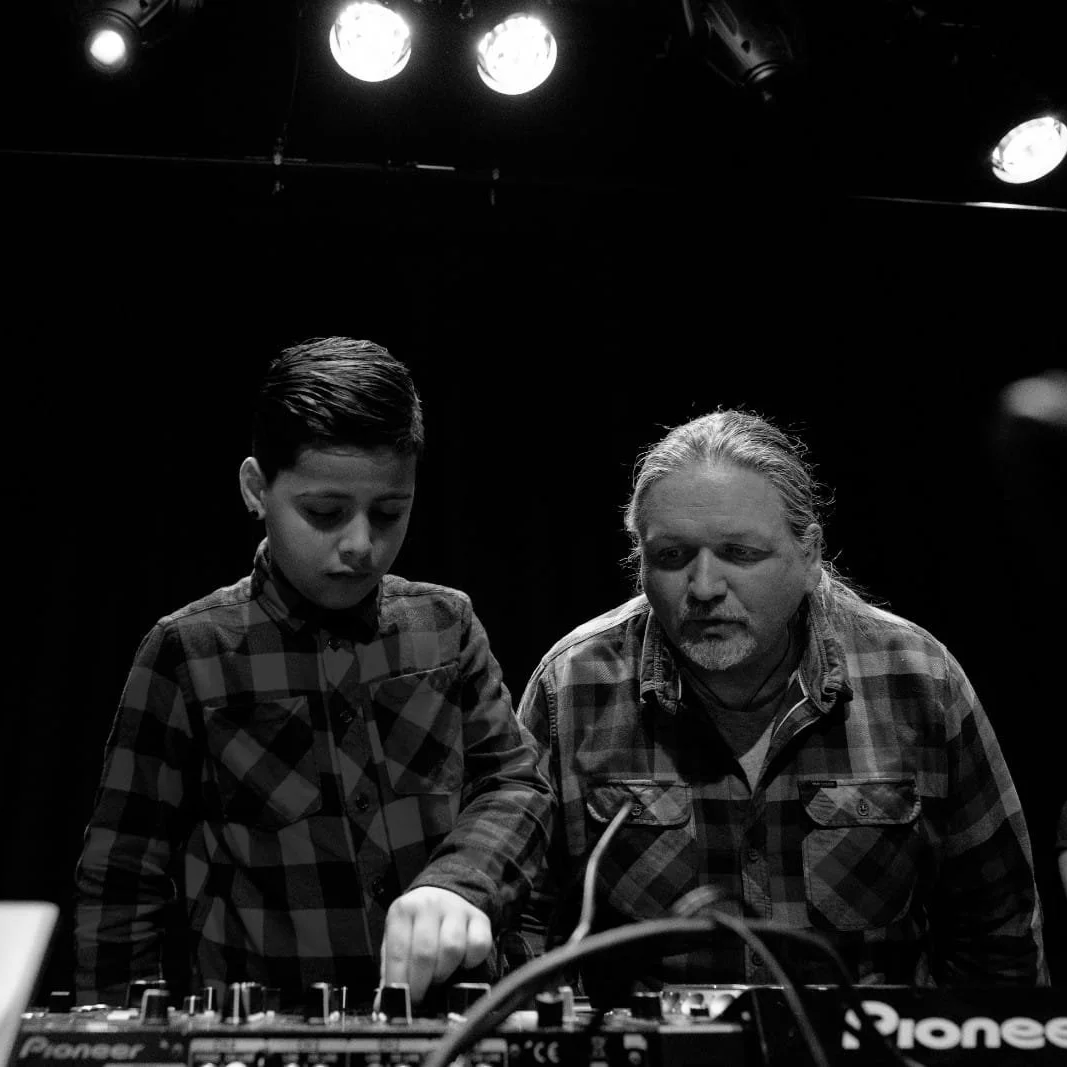
René Nagtegaal | 1968 - 2021
René was a vinyl collector, dj, coach and shaman living in the Netherlands. In the early 2000’s he went on spiritual travels to Mexico and was initiated in several indiginous shamanic traditions, allowing him to guide small rituals here.
In his free time, he loved watching documentaries on Netflix, and eating lots of chocolate chip cookies while scrolling through Marktplaats (Dutch eBay) for vintage audio gear.
René died in 2021, he is missed dearly.
In particular:
his creative and intelligent word play, his kind heart, his keen enthusiasm for cursing and sincere love of the fart as a phenomenon.
Building a powerful archive of embodied knowledge, one conversation at a time.